PPC and Production Efficiency
Microeconomics
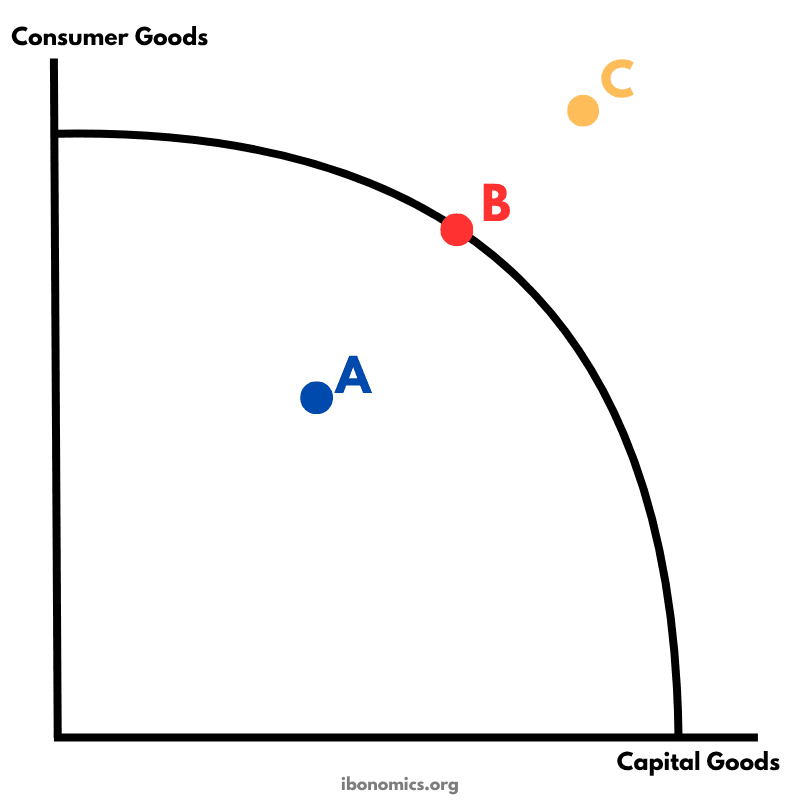
A PPC diagram showing different levels of production efficiency and economic feasibility using combinations of consumer and capital goods.
Curves and Elements
ppc
Production Possibility Curve (PPC): Shows the maximum combinations of consumer and capital goods that an economy can produce using all available resources efficiently.
point a
Point A: Inefficient use of resources — attainable but not desirable.
point b
Point B: Efficient use of all resources — the economy is operating at full capacity.
point c
Point C: Unattainable with current resources — requires economic growth to reach.
Point A lies inside the PPC and represents underutilization of resources — the economy is not producing at full efficiency.
Point B lies on the PPC curve and represents productive efficiency — the economy is maximizing its use of available resources.
Point C lies outside the PPC and is currently unattainable with the existing resource base and technology.
Economic growth or technological advancement would be required to shift the PPC outward and make point C attainable.
The PPC demonstrates opportunity cost: producing more of one type of good requires sacrificing the production of the other due to scarce resources.
More Microeconomics Diagrams
Explore other diagrams from the same unit to deepen your understanding
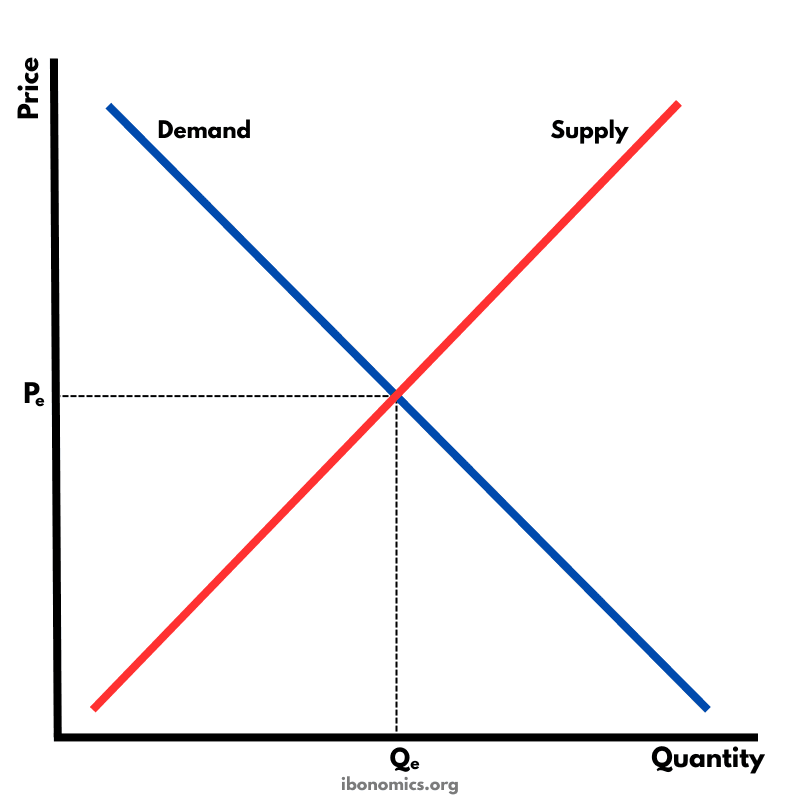
The fundamental diagram showing the relationship between demand and supply in a competitive market, determining equilibrium price and quantity.
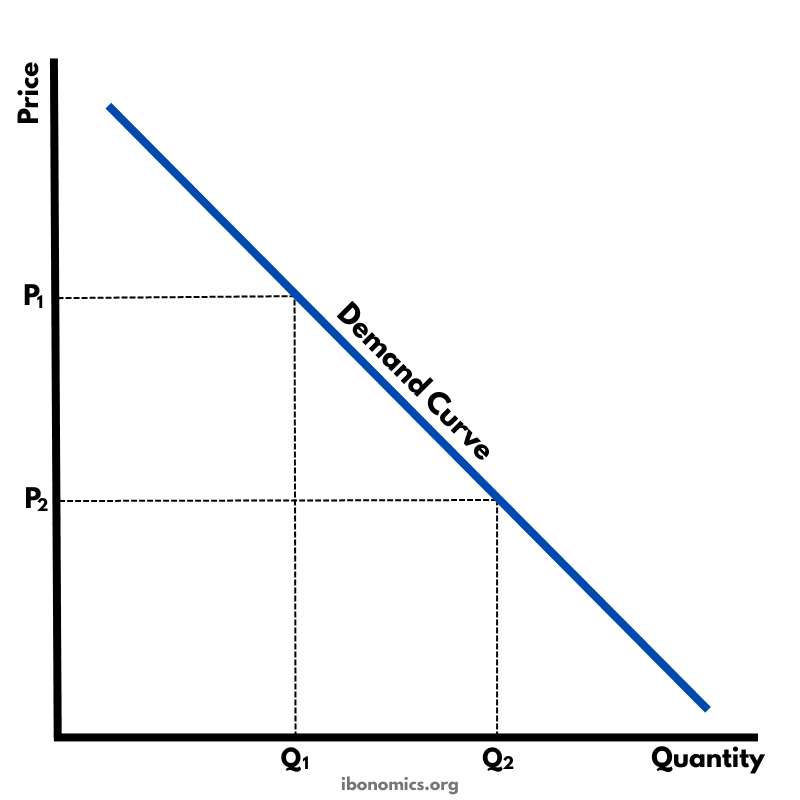
A basic diagram showing the inverse relationship between price and quantity demanded, illustrating the law of demand.
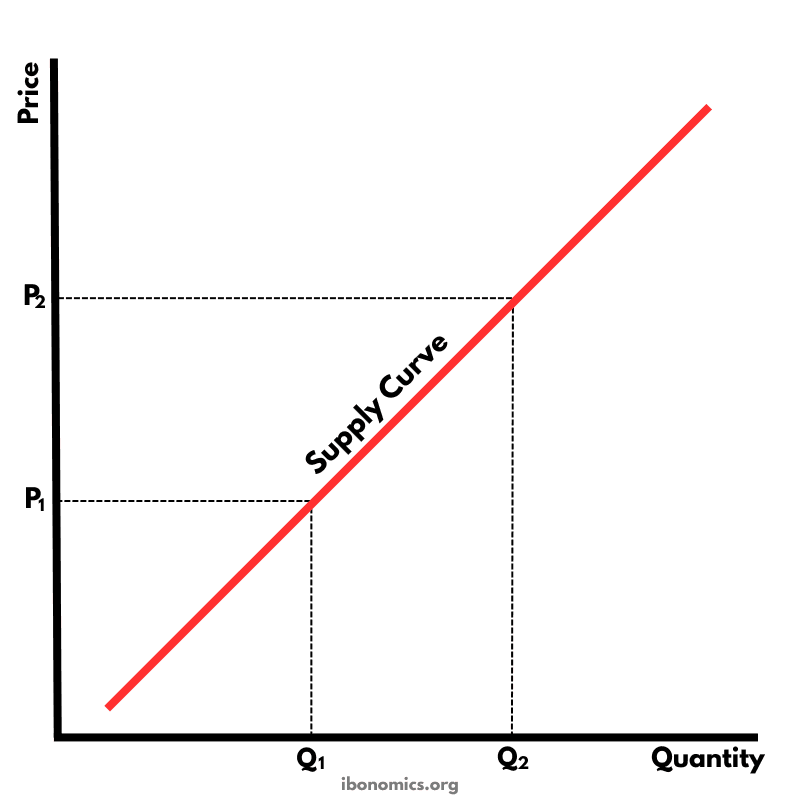
A basic diagram showing the positive relationship between price and quantity supplied, illustrating the law of supply.
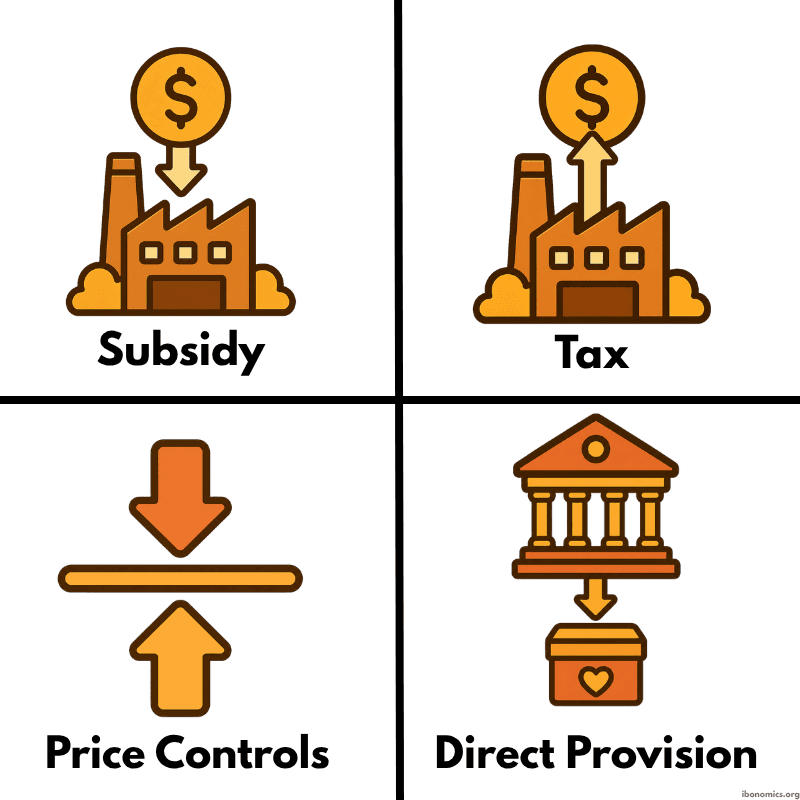
A simple diagram showing four common forms of government intervention in markets: subsidies, taxes, price controls, and direct provision.
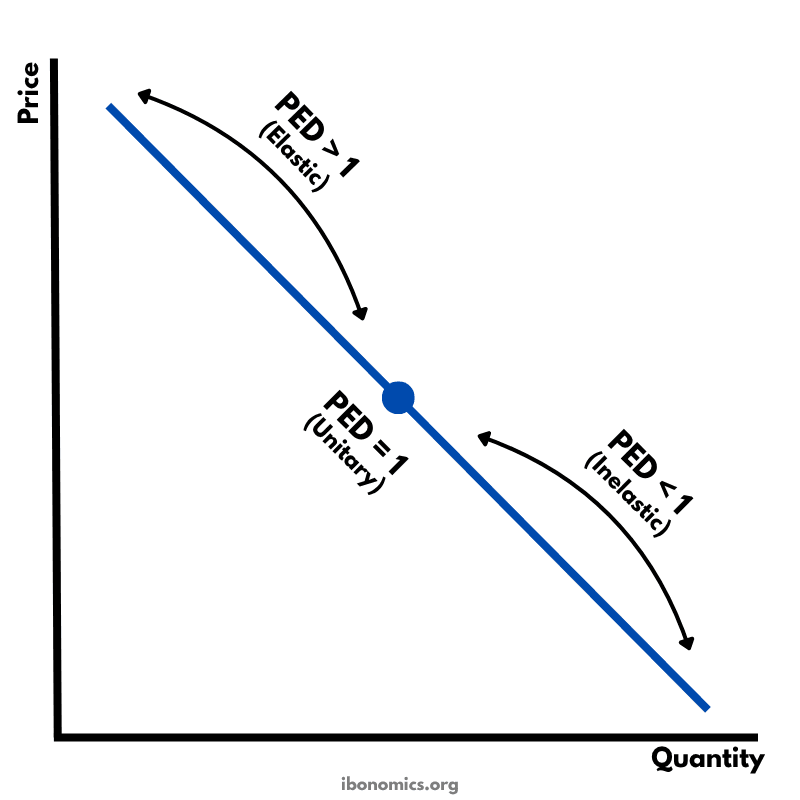
A diagram showing how price elasticity of demand changes along a straight-line demand curve, from elastic to unitary elastic to inelastic.
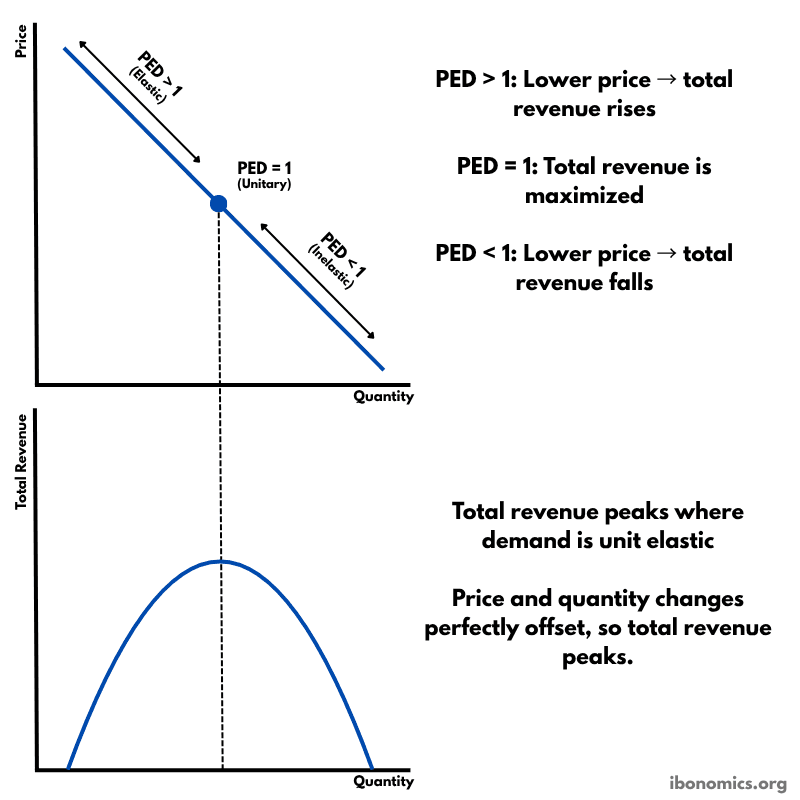
A diagram showing how price elasticity of demand affects total revenue, with total revenue maximized where demand is unitary elastic.