Monopolistic Competition Short Run Loss
Microeconomics
A diagram showing a monopolistically competitive firm making a loss in the short run when average cost is above price.
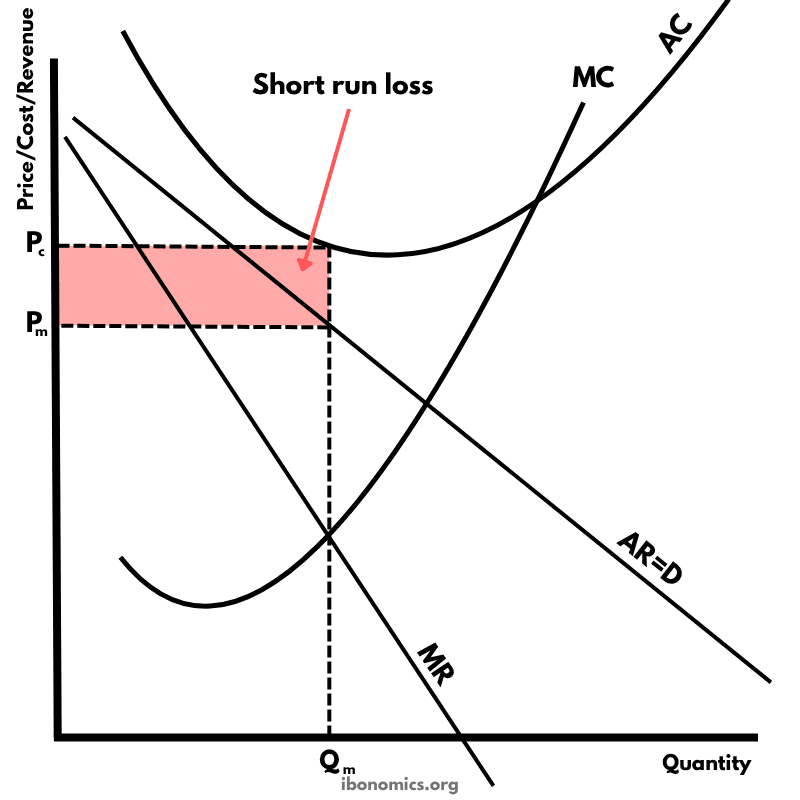
Curves and Elements
demand
AR = D: The average revenue curve, which is also the firm’s demand curve.
marginal revenue
MR: The marginal revenue curve, which lies below the demand curve because the firm faces downward-sloping demand.
marginal cost
MC: The marginal cost curve, showing the additional cost of producing one more unit.
average cost
AC: The average cost curve, showing cost per unit of output.
loss minimizing output
Loss-minimizing Output (Qm): The output level where MC equals MR.
price
Price (Pm): The price charged at output Qm, found from the demand curve.
short run loss
Short Run Loss: The shaded area between average cost and price at Qm, showing that cost per unit is higher than revenue per unit.
In monopolistic competition, firms face a downward-sloping demand curve because products are differentiated.
The firm maximizes profit or minimizes loss by producing where marginal cost equals marginal revenue.
The short-run output is Qm, found where MC intersects MR, and the price is Pm, found from the demand curve.
At Qm, average cost is higher than price, meaning the firm makes a short-run loss.
The shaded area shows the loss, equal to the difference between average cost and price multiplied by output.
More Microeconomics Diagrams
Explore other diagrams from the same unit to deepen your understanding
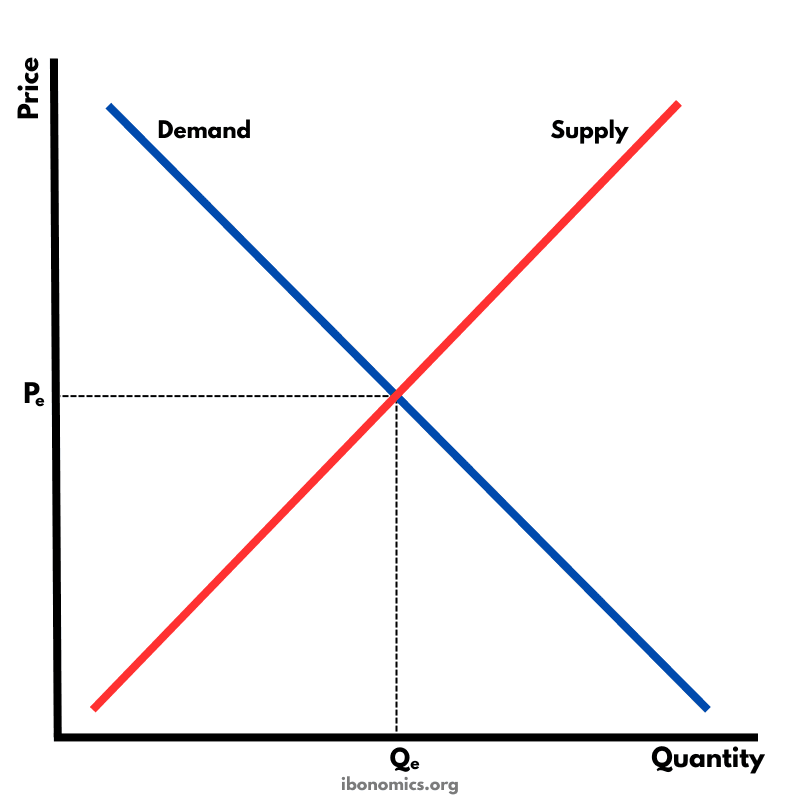
The fundamental diagram showing the relationship between demand and supply in a competitive market, determining equilibrium price and quantity.
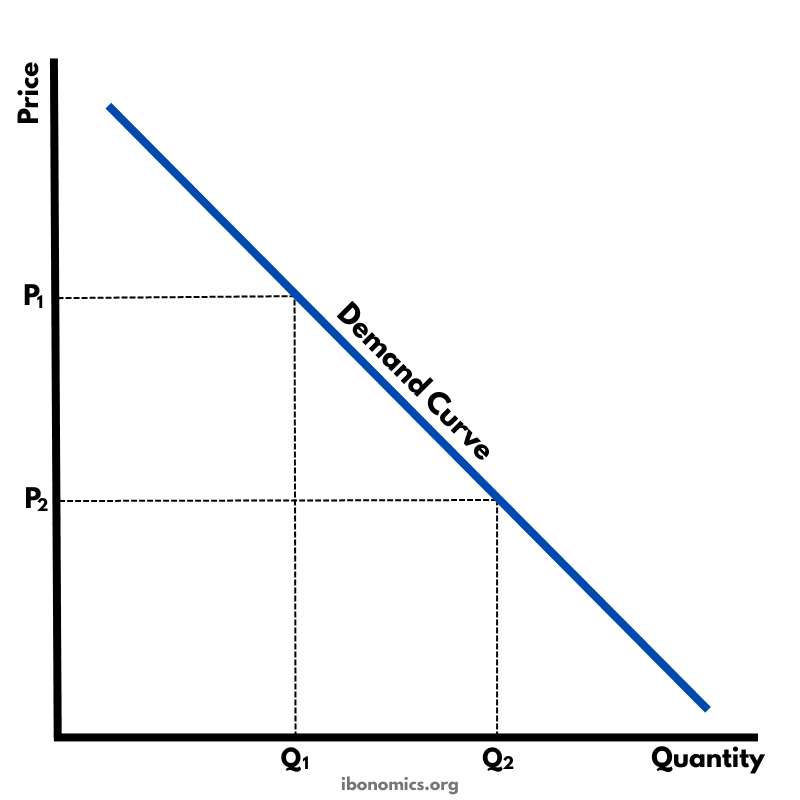
A basic diagram showing the inverse relationship between price and quantity demanded, illustrating the law of demand.
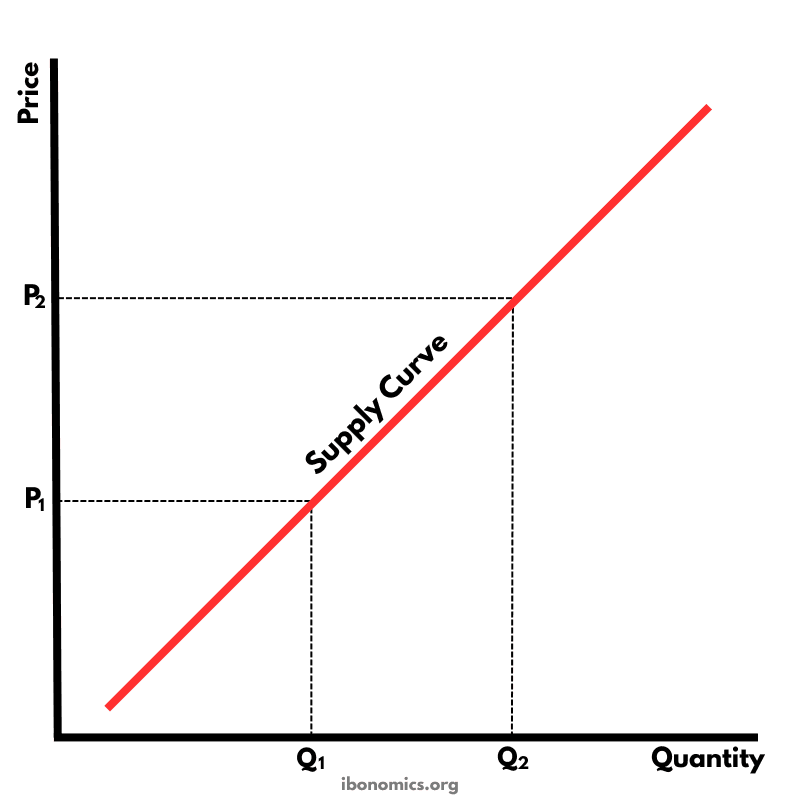
A basic diagram showing the positive relationship between price and quantity supplied, illustrating the law of supply.
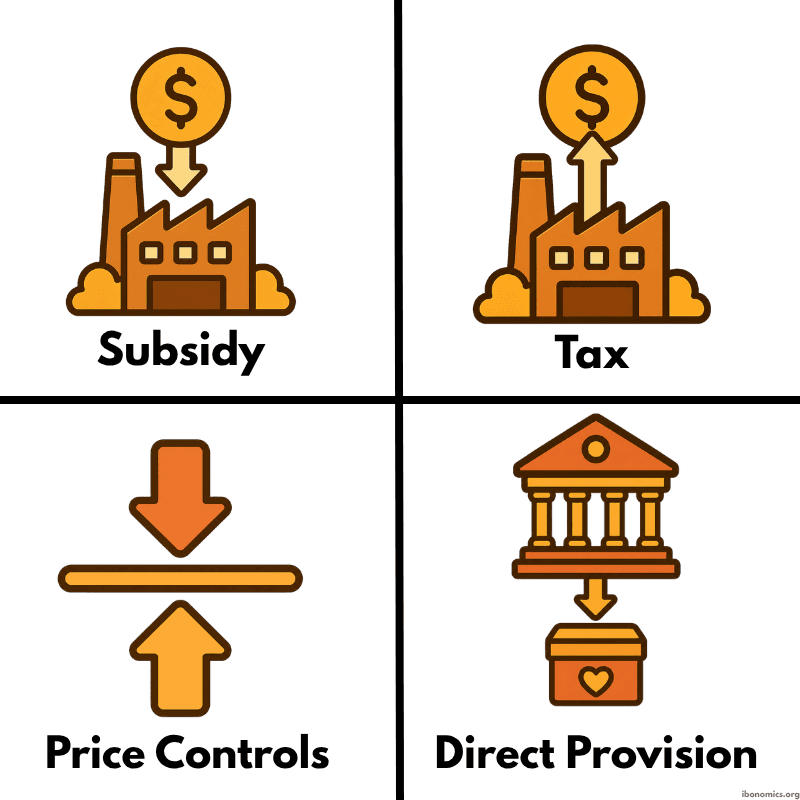
A simple diagram showing four common forms of government intervention in markets: subsidies, taxes, price controls, and direct provision.
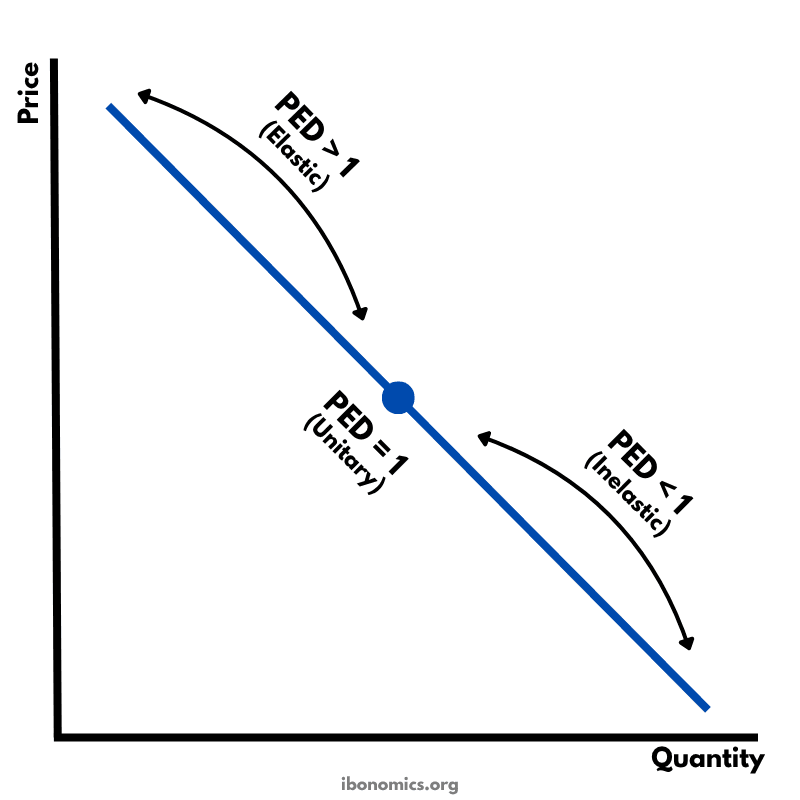
A diagram showing how price elasticity of demand changes along a straight-line demand curve, from elastic to unitary elastic to inelastic.
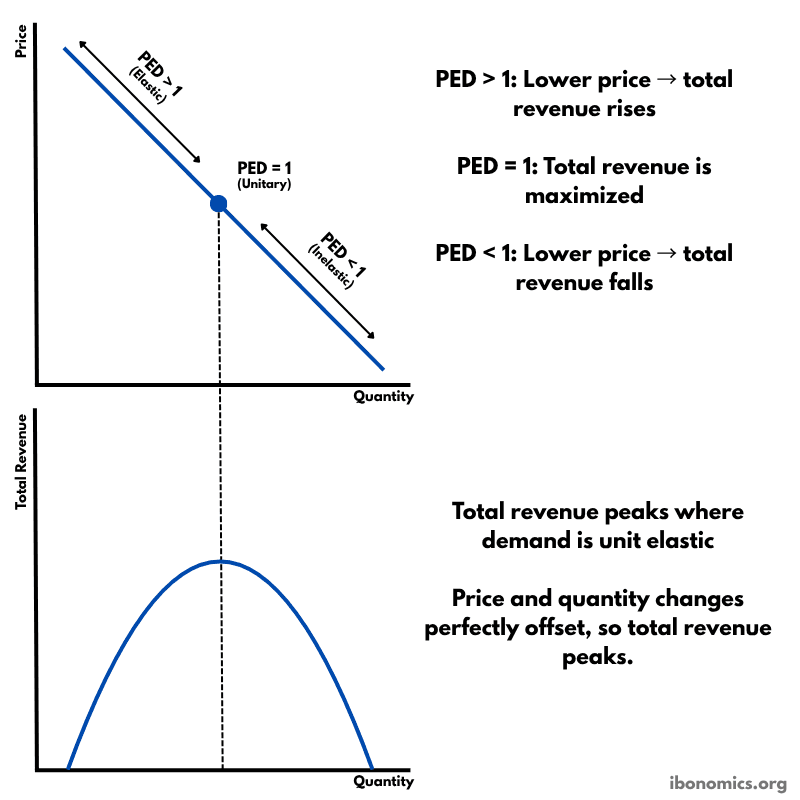
A diagram showing how price elasticity of demand affects total revenue, with total revenue maximized where demand is unitary elastic.