Trade Diversion – Switching Import Sources After Joining a Trading Bloc
Global Economics
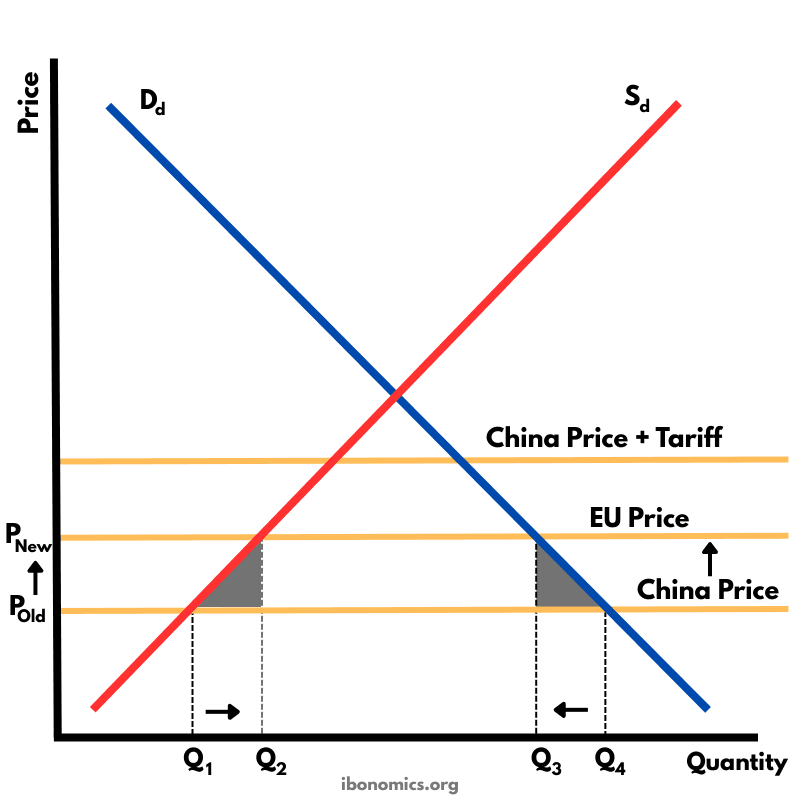
This diagram illustrates trade diversion: when a country (IBonomica) joins a trading bloc such as the EU and must impose a tariff on cheaper non-member imports (China). Because the EU now faces no tariff but China does, IBonomica switches its imports from the cheaper Chinese supplier to the more expensive EU supplier. Although imports increase from the EU, the overall price paid is higher than before, meaning global efficiency is reduced.
Curves and Elements
china price
China Price: The lowest world price before tariffs, representing the most efficient supplier.
china price tariff
China Price + Tariff: Higher price after joining the EU, making Chinese goods less competitive.
eu price
EU Price: Higher than China’s original price but now cheaper relative to tariff-inflated Chinese imports.
domestic supply
Domestic Supply (Sd): Upward-sloping supply showing IBonomica's domestic producers.
domestic demand
Domestic Demand (Dd): Downward-sloping demand showing IBonomica's import needs.
IBonomica originally imports from China at the lowest world price, represented by the 'China Price' line.
After joining the EU trade bloc, IBonomica must impose a tariff on Chinese goods, raising their price to 'China Price + Tariff'.
EU goods now become relatively cheaper because they enter tariff-free, even though they are still more expensive than China’s original price.
IBonomica switches its imports from China to the EU, creating trade diversion: imports shift to a less efficient but tariff-favoured partner.
Consumers pay a higher price than before (EU price > original China price), causing a loss in global efficiency even though intra-bloc trade rises.
More Global Economics Diagrams
Explore other diagrams from the same unit to deepen your understanding
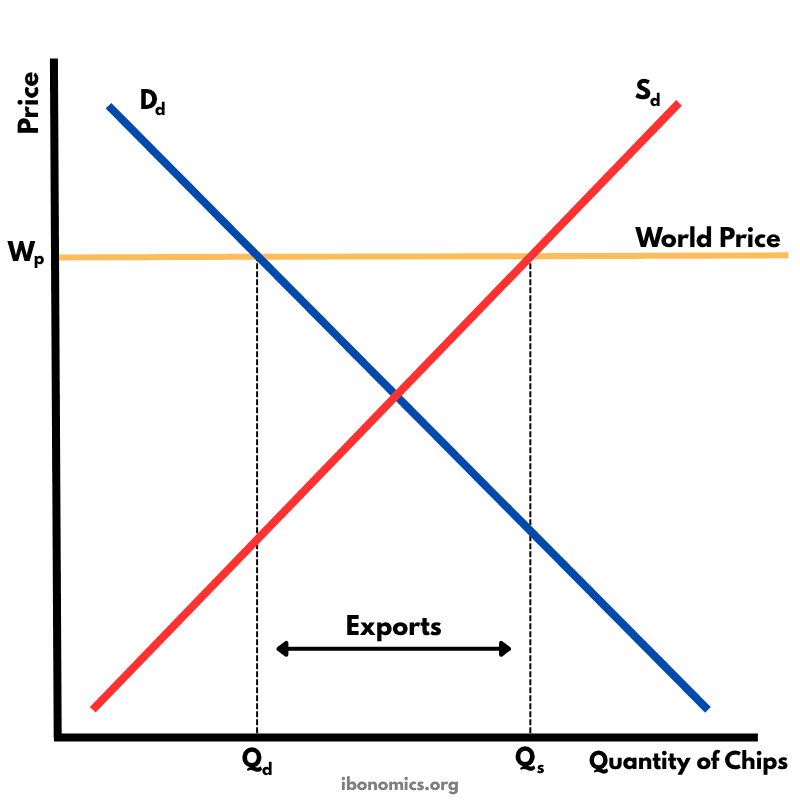
This diagram shows how a country exports goods under free trade when the world price is higher than the domestic equilibrium price.
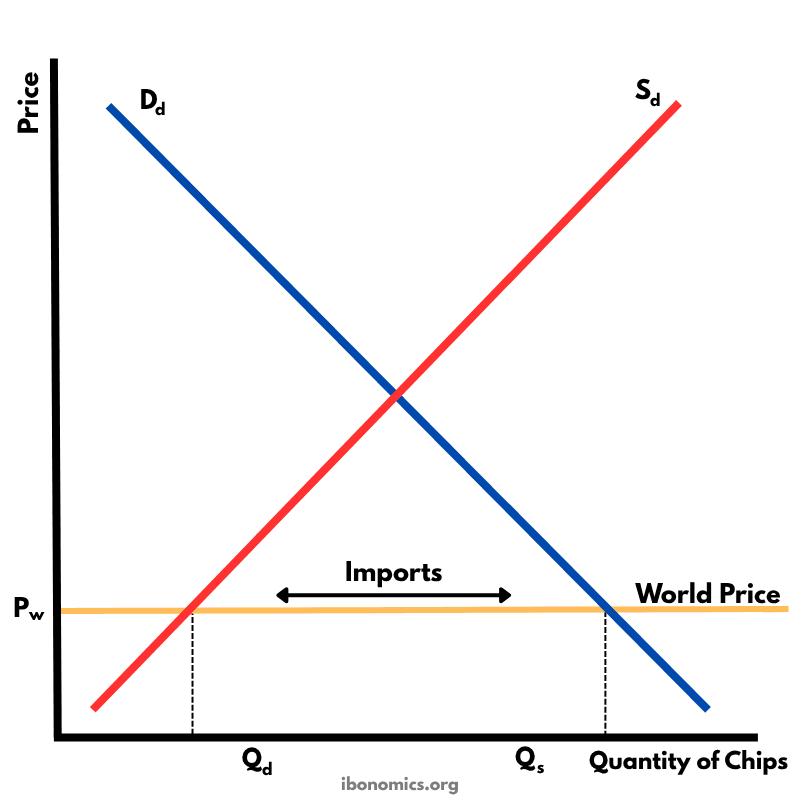
This diagram illustrates how a country imports goods under free trade when the world price is lower than the domestic equilibrium price.
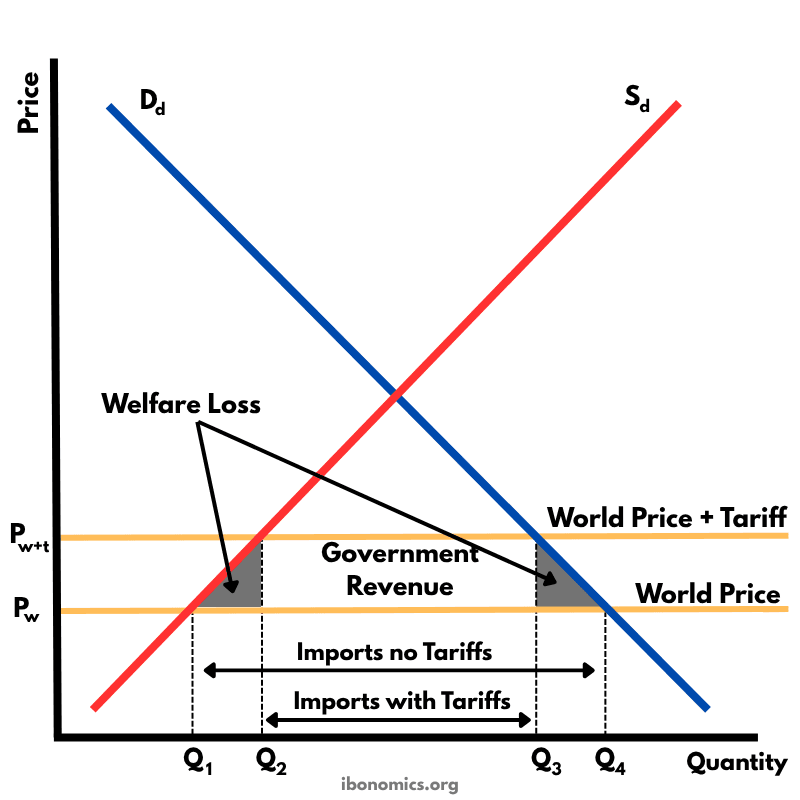
This diagram shows the effects of a tariff imposed on imported goods. A tariff raises the price of imports, protecting domestic producers but creating welfare losses.
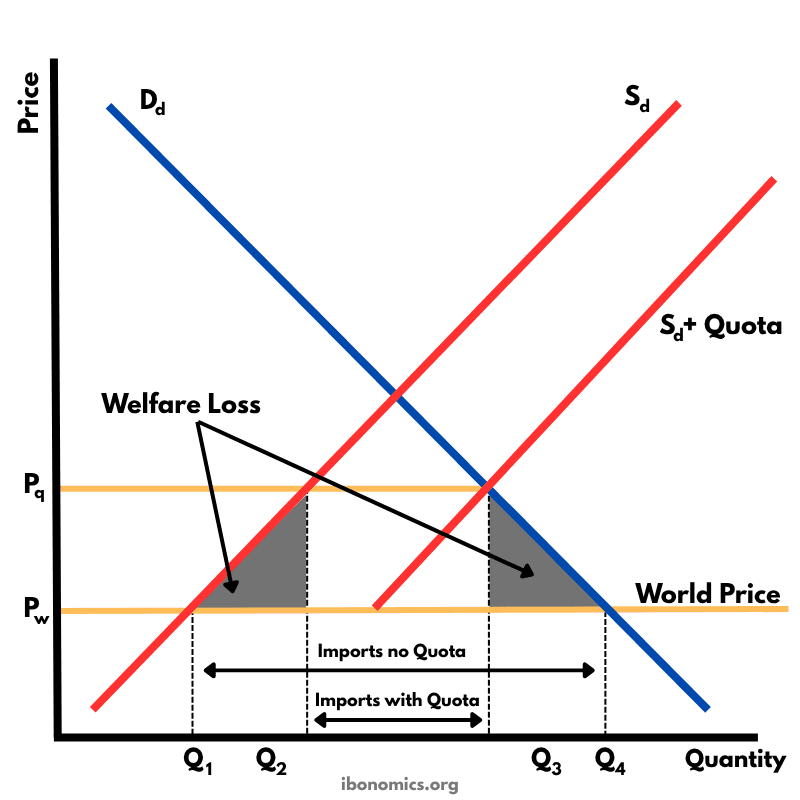
This diagram shows the impact of an import quota that limits how many units of a good can be imported. By restricting imports, the domestic price rises above the world price, domestic producers expand output, consumers buy less, and there is a net welfare loss.
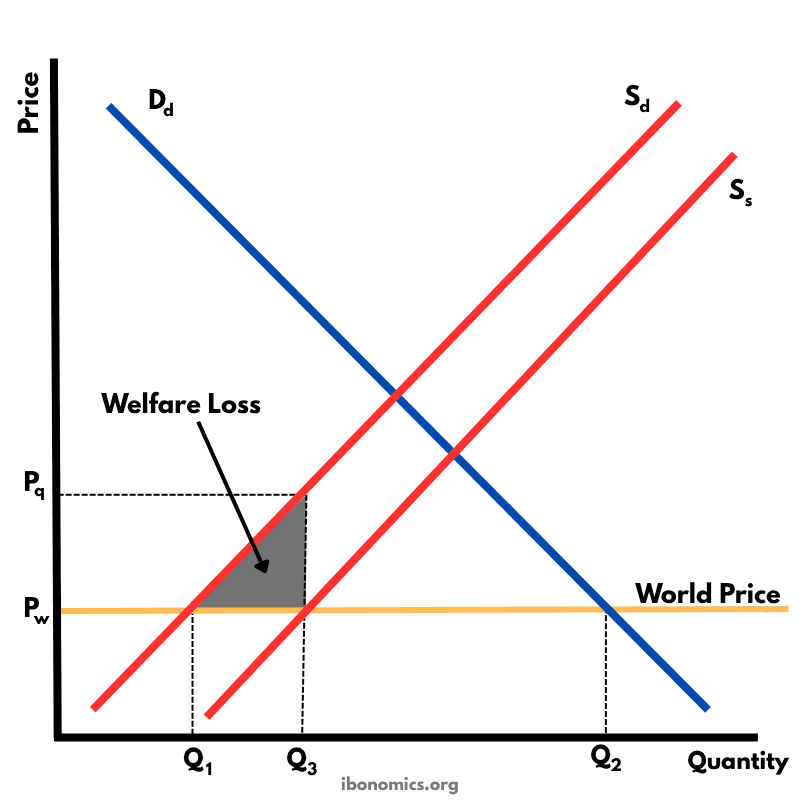
This diagram illustrates the effects of a production subsidy, where the government supports domestic producers to lower their costs and increase output. It is a form of protectionism without raising consumer prices directly.
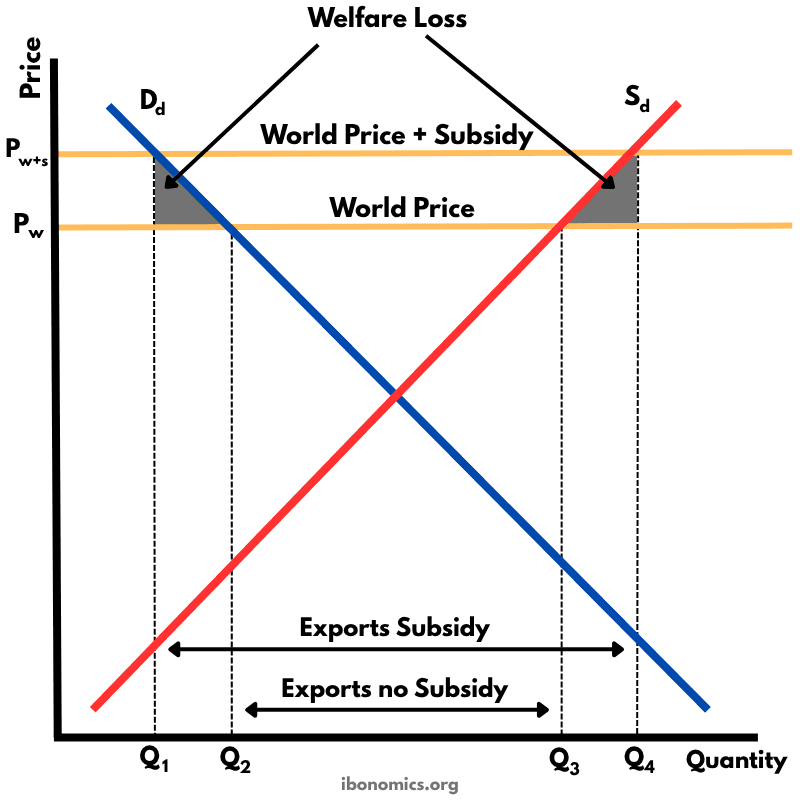
This diagram shows how an export subsidy raises the domestic price above the world price, encouraging producers to export more while reducing consumer welfare and creating deadweight losses.