Trade Creation – Removing Tariffs to Import at Lower World Prices
Global Economics
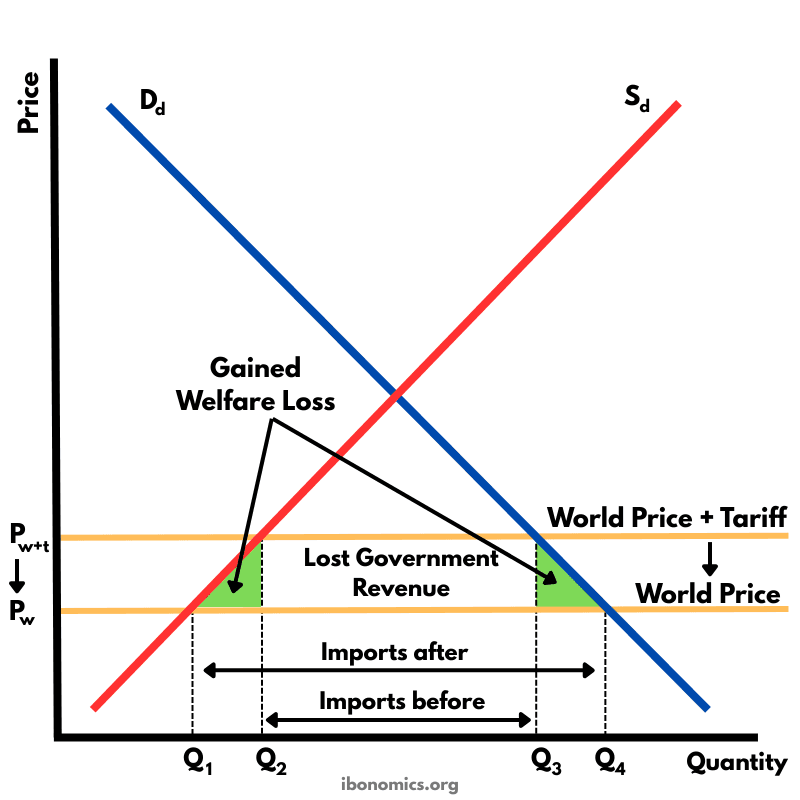
This diagram illustrates trade creation: when a country removes a tariff on imports and begins buying goods at the lower world price rather than producing them domestically at a higher cost. As tariffs are removed, the domestic price falls from the tariff-inclusive price to the world price, imports increase, and consumer welfare rises. The economy becomes more efficient because resources shift from high-cost domestic production to lower-cost international suppliers.
Curves and Elements
world price
World Price: The lower price IBonomica can buy imports for once the tariff is removed.
world price tariff
World Price + Tariff: The higher domestic price when the tariff was in place.
domestic supply
Domestic Supply (Sd): High-cost domestic producers supplying more when protected by tariffs.
domestic demand
Domestic Demand (Dd): Consumers increasing quantity demanded when the tariff is removed.
Initially, the tariff raises the domestic price to 'World Price + Tariff', causing higher prices for consumers and limiting imports.
When the tariff is removed, the domestic price falls to the lower 'World Price', making foreign goods cheaper for consumers.
Imports expand from the smaller range (Q1–Q2) to a much larger range (Q3–Q4), representing increased trade with more efficient foreign producers.
Consumers gain welfare because they now pay a lower price, shown by the green welfare-gain areas in the diagram.
Government revenue disappears, but society overall benefits because the loss is smaller than the efficiency gain created by cheaper imports.
More Global Economics Diagrams
Explore other diagrams from the same unit to deepen your understanding
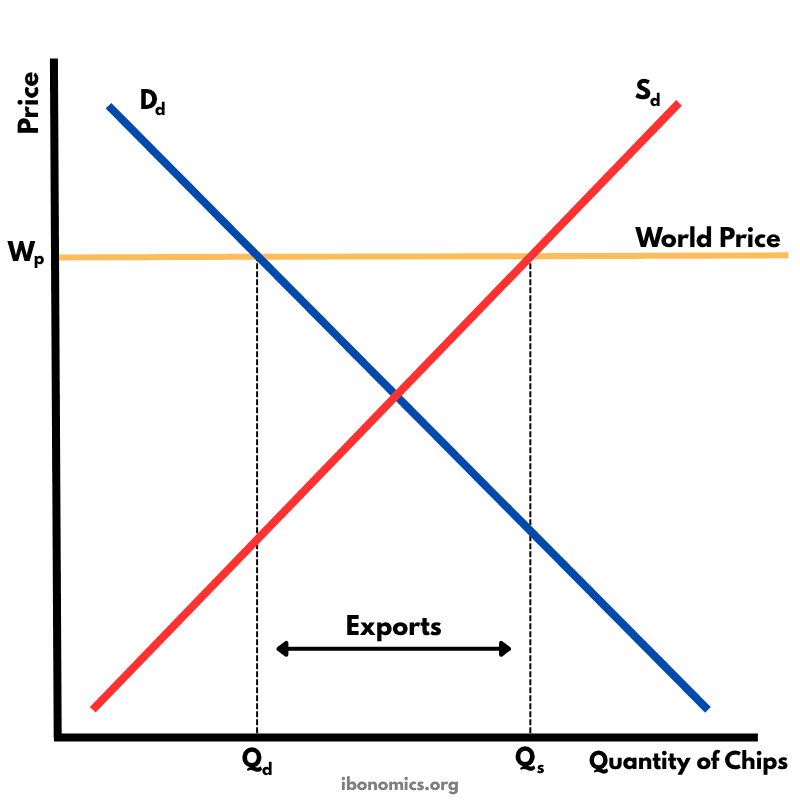
This diagram shows how a country exports goods under free trade when the world price is higher than the domestic equilibrium price.
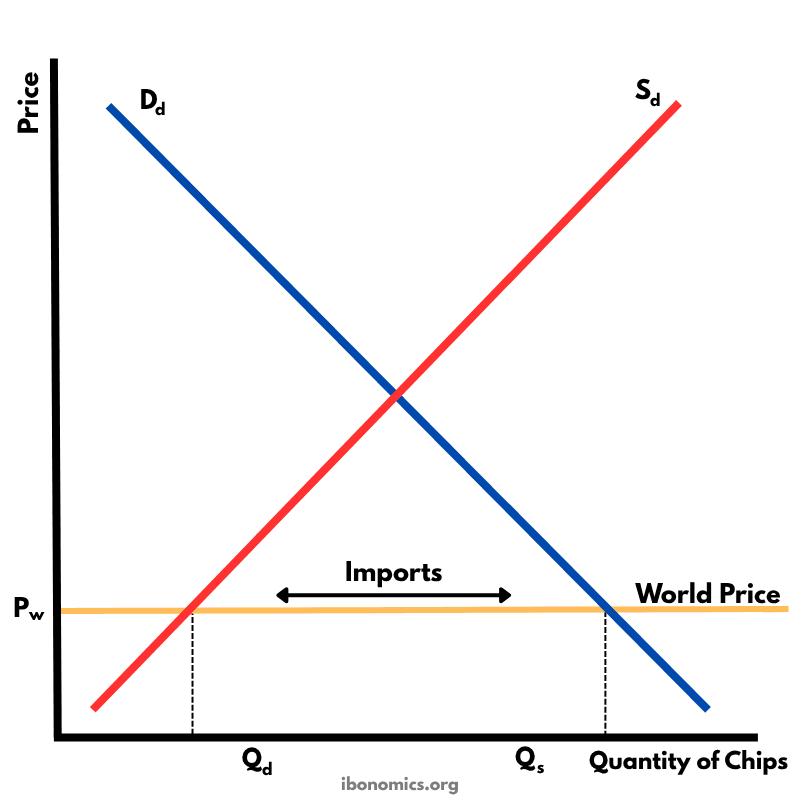
This diagram illustrates how a country imports goods under free trade when the world price is lower than the domestic equilibrium price.
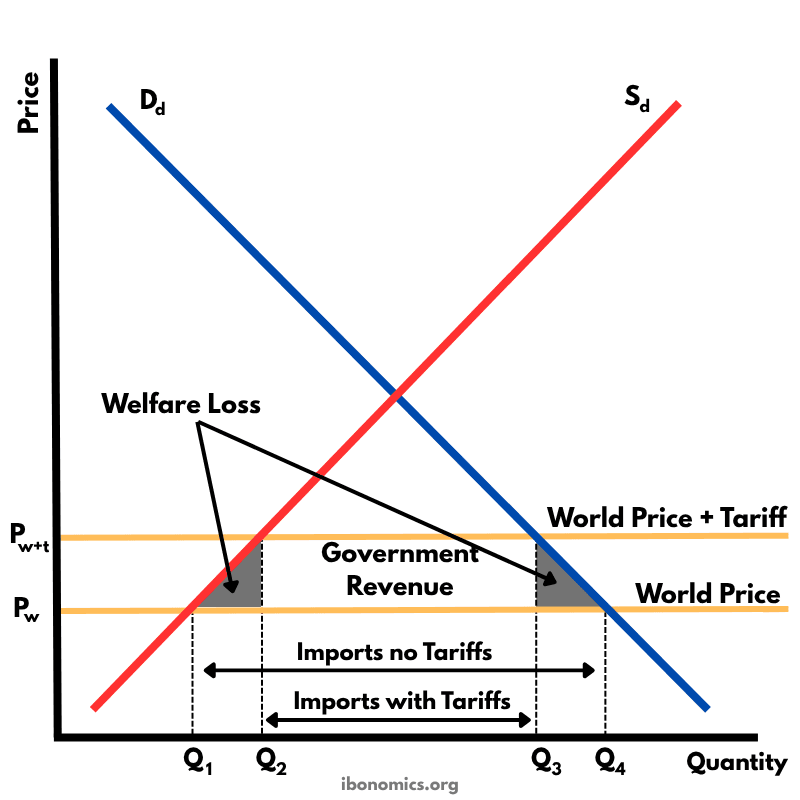
This diagram shows the effects of a tariff imposed on imported goods. A tariff raises the price of imports, protecting domestic producers but creating welfare losses.
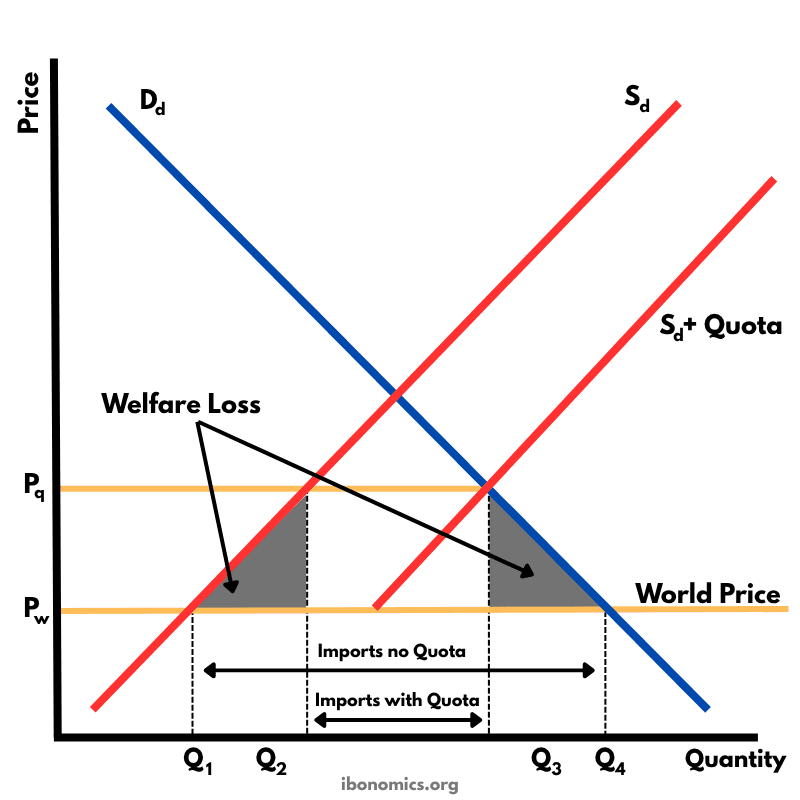
This diagram shows the impact of an import quota that limits how many units of a good can be imported. By restricting imports, the domestic price rises above the world price, domestic producers expand output, consumers buy less, and there is a net welfare loss.
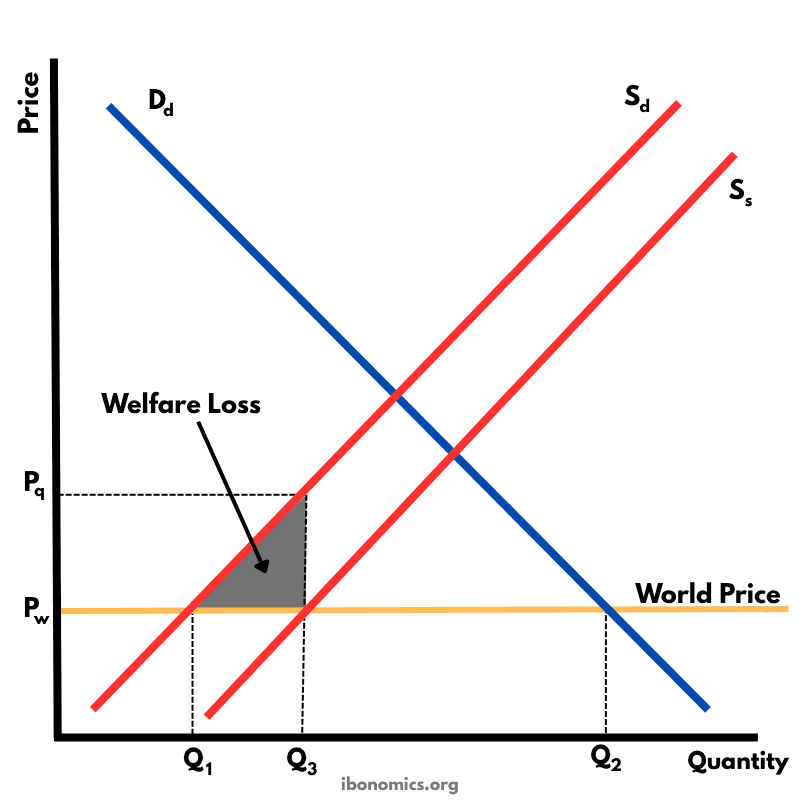
This diagram illustrates the effects of a production subsidy, where the government supports domestic producers to lower their costs and increase output. It is a form of protectionism without raising consumer prices directly.
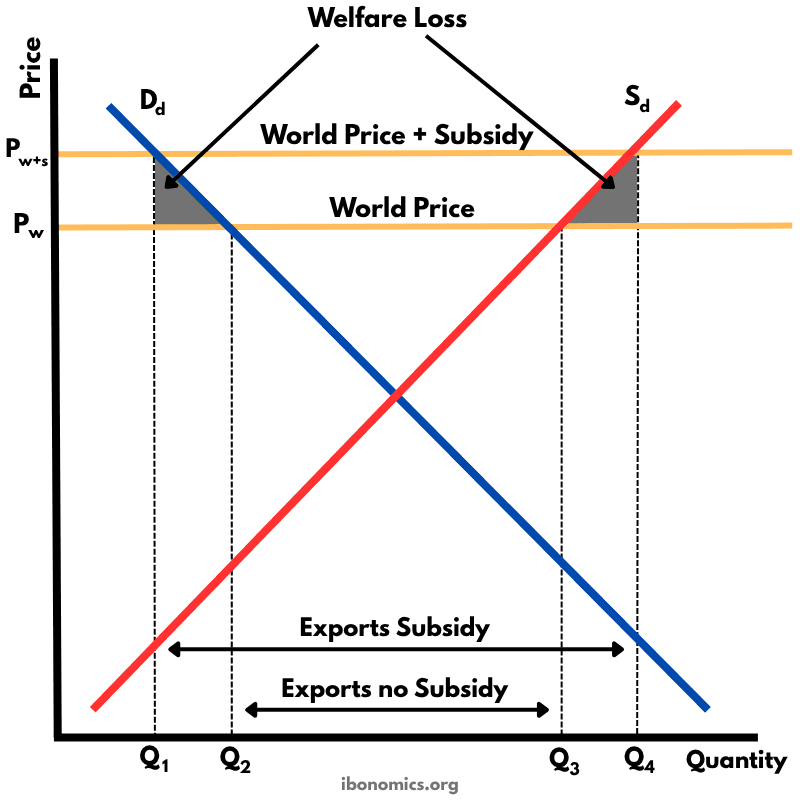
This diagram shows how an export subsidy raises the domestic price above the world price, encouraging producers to export more while reducing consumer welfare and creating deadweight losses.