Exchange Rate Appreciation – Increased Demand and Reduced Supply of Currency
Global Economics
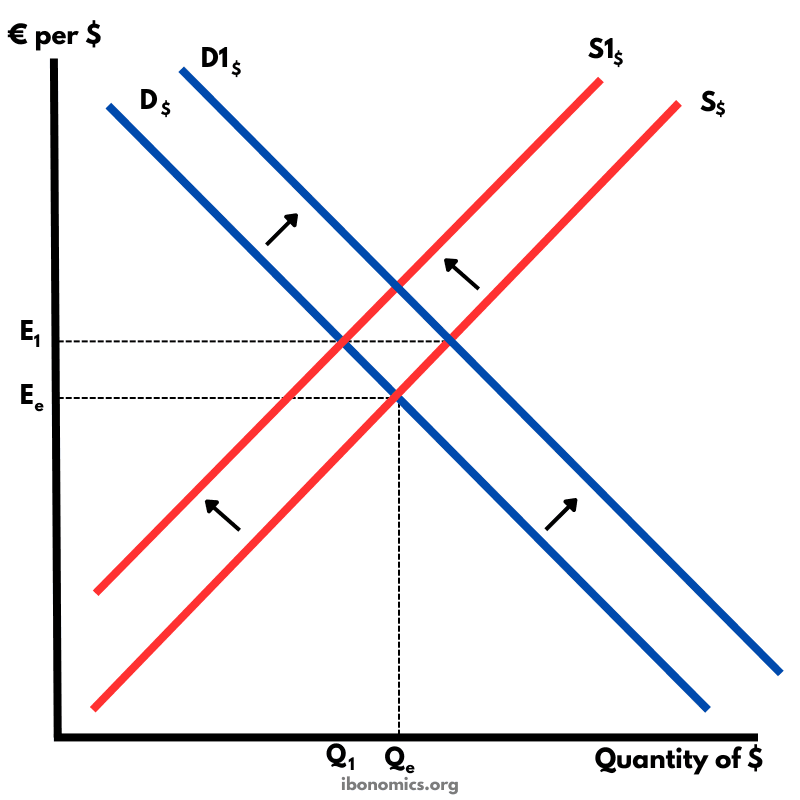
This diagram illustrates a general appreciation of a currency in the foreign exchange market. An appreciation occurs when the value of the currency rises due to an increase in demand and/or a decrease in supply of the currency.
Curves and Elements
demand currency
Demand for the currency (D$): Downward-sloping; a rightward shift indicates higher demand at each exchange rate.
supply currency
Supply of the currency (S$): Upward-sloping; a leftward shift indicates fewer units supplied at each exchange rate.
initial equilibrium
Ee: The original equilibrium exchange rate before the shifts in demand and supply.
new equilibrium
E1: The higher equilibrium exchange rate after the shifts, showing currency appreciation.
The initial equilibrium exchange rate is shown at Ee, where demand for the currency (D$) intersects supply of the currency (S$).
An increase in demand for the currency, shown by a rightward shift from D$ to D1$, may occur due to higher foreign demand for exports, capital inflows, or higher interest rates.
A reduction in the supply of the currency, shown by a leftward shift from S$ to S1$, may occur when imports fall, meaning fewer units of the currency are sold in foreign exchange markets.
The combined effect of higher demand and lower supply leads to a higher equilibrium exchange rate (from Ee to E1).
The rise in the exchange rate represents an appreciation of the currency.
More Global Economics Diagrams
Explore other diagrams from the same unit to deepen your understanding
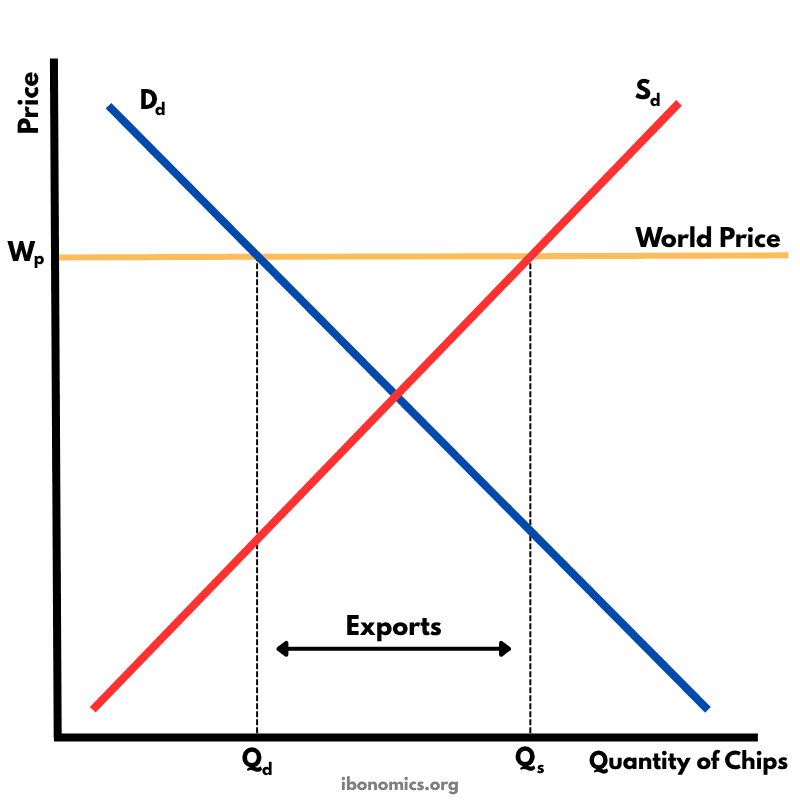
This diagram shows how a country exports goods under free trade when the world price is higher than the domestic equilibrium price.
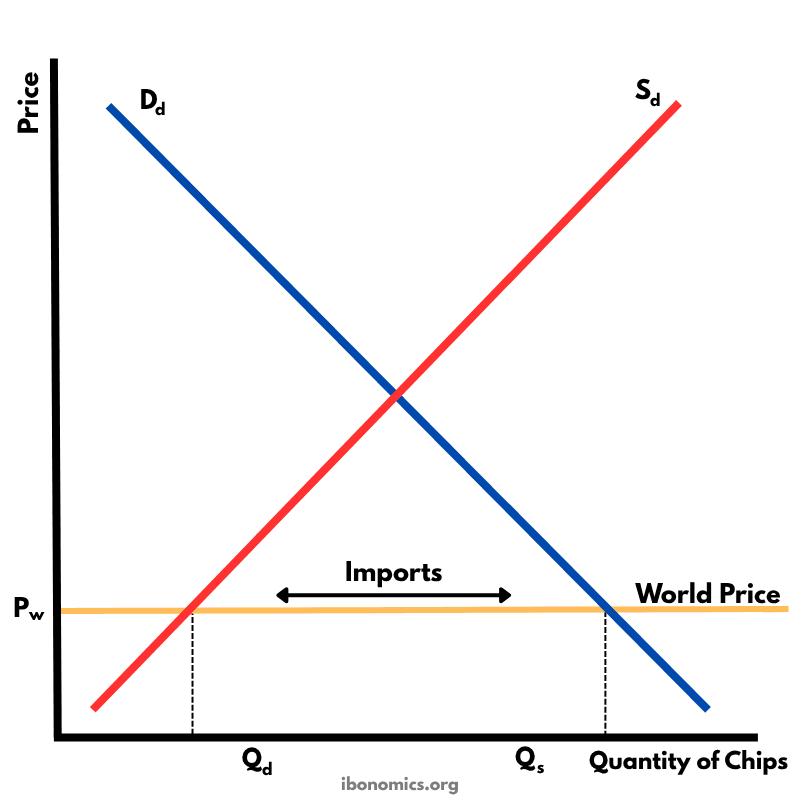
This diagram illustrates how a country imports goods under free trade when the world price is lower than the domestic equilibrium price.
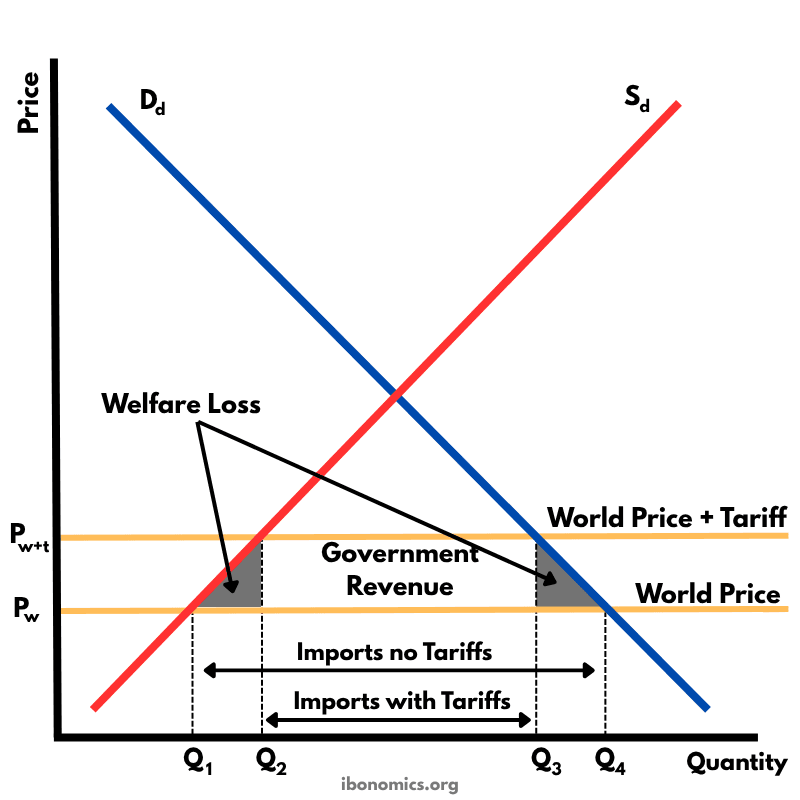
This diagram shows the effects of a tariff imposed on imported goods. A tariff raises the price of imports, protecting domestic producers but creating welfare losses.
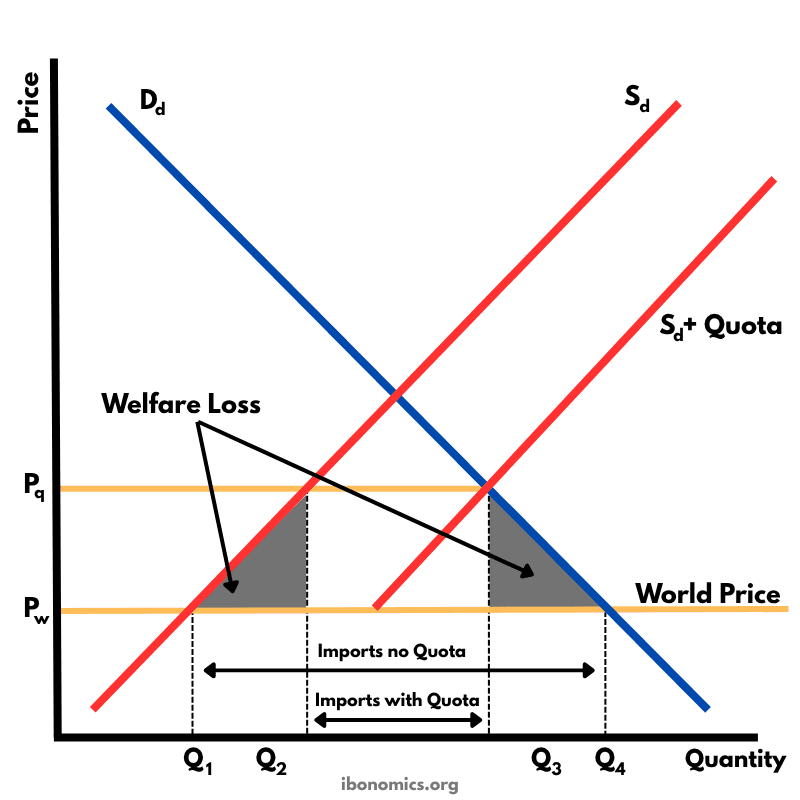
This diagram shows the impact of an import quota that limits how many units of a good can be imported. By restricting imports, the domestic price rises above the world price, domestic producers expand output, consumers buy less, and there is a net welfare loss.
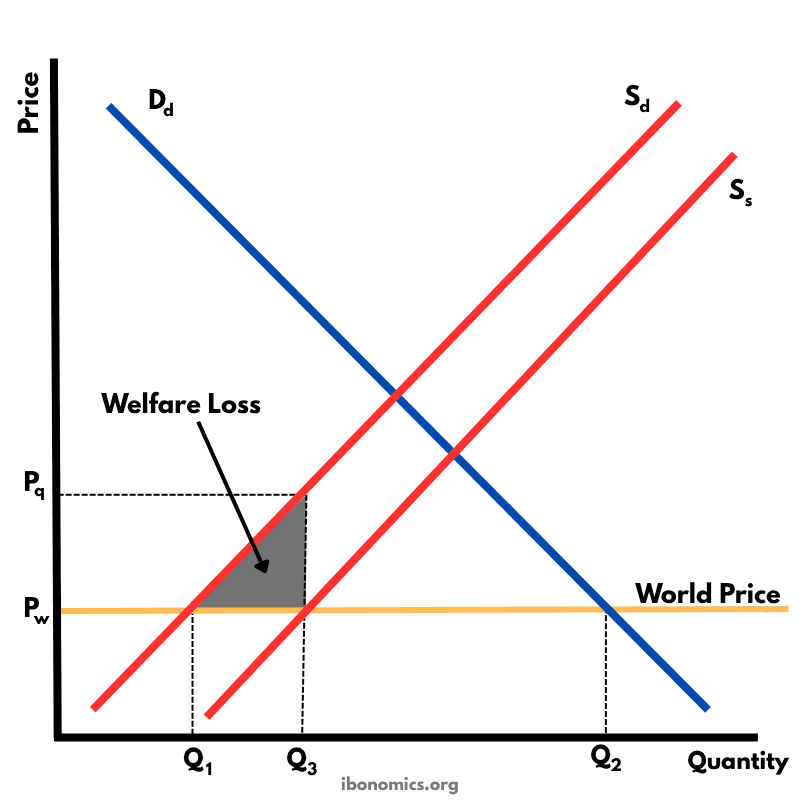
This diagram illustrates the effects of a production subsidy, where the government supports domestic producers to lower their costs and increase output. It is a form of protectionism without raising consumer prices directly.
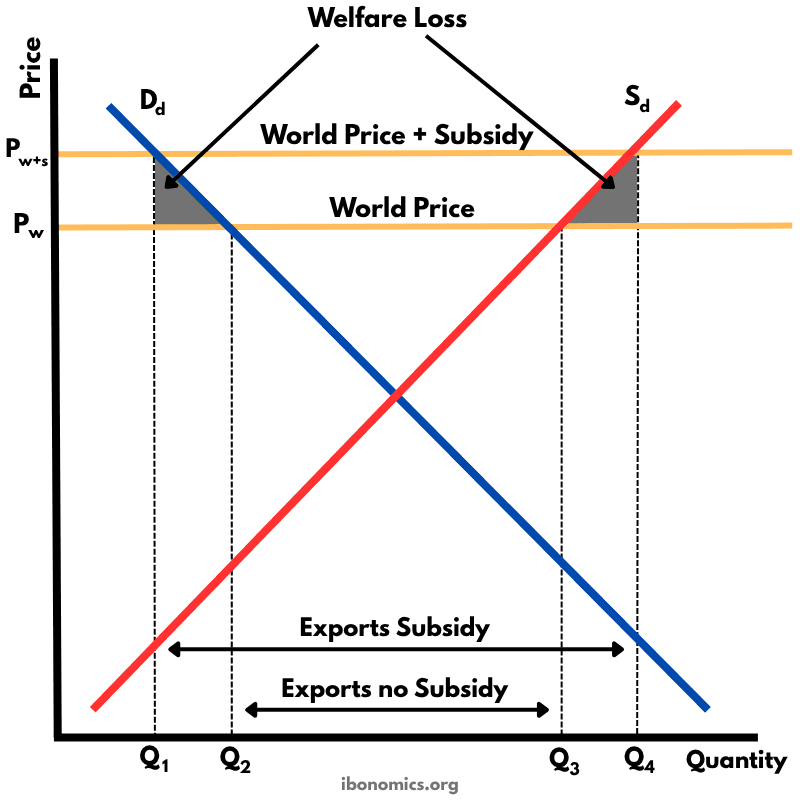
This diagram shows how an export subsidy raises the domestic price above the world price, encouraging producers to export more while reducing consumer welfare and creating deadweight losses.