Growth vs Development in IB Economics: What Is the Difference?
An IB Economics-friendly explanation of the difference between economic growth and economic development, including why growth does not always mean better welfare and why development is broader than GDP alone.
Growth vs Development in IB Economics
A common IB Economics question is: what is the difference between economic growth and economic development? Although the two concepts are related, they are not the same.
In simple terms, economic growth is about an increase in an economy’s real output over time, while economic development is about improvements in welfare and quality of life. Growth is mainly a quantitative concept. Development is broader and more qualitative, because it includes changes in health, education, living standards and the opportunities available to people.
Economic Growth: An Increase in Real Output
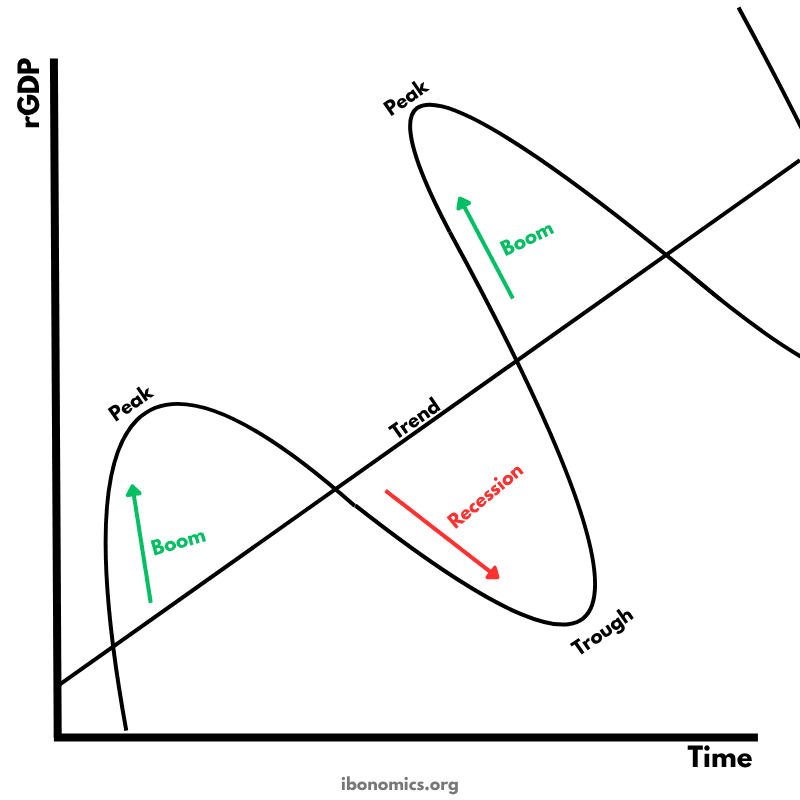
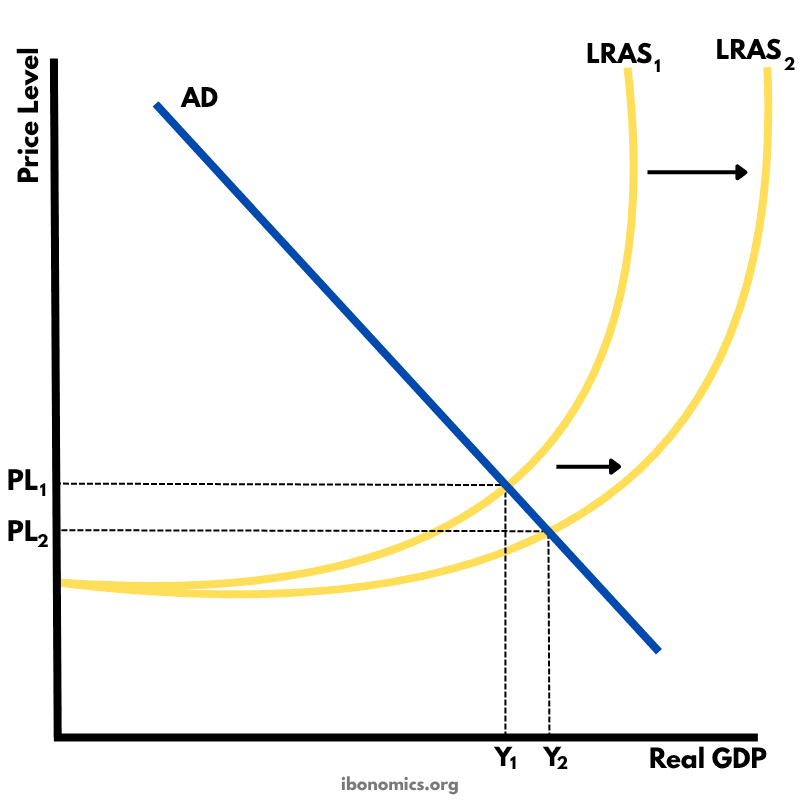
Economic growth refers to an increase in real GDP over a period of time. Real GDP matters because it adjusts for inflation, so it captures the true increase in output rather than just higher prices.
According to the World Bank, GDP growth is the annual percentage change in GDP measured at constant prices. The World Bank also explains that GDP can be measured in three ways:
- the output (production) method
- the income method
- the expenditure method
Using the expenditure method, GDP can be expressed in the familiar IB form:
GDP = C + I + G + (X - M)
where:
- C = consumption
- I = investment
- G = government spending
- X - M = net exports
This means economic growth focuses on the value of goods and services produced in the economy. It tells us whether the economy is producing more, but it does not automatically tell us whether people are healthier, better educated, more equal, or living more fulfilling lives.
Economic Development: A Broader Improvement in Welfare
Economic development is much broader than growth. It refers to an improvement in welfare, standard of living, and quality of life.
The United Nations Development Programme (UNDP) describes human development as expanding people’s choices and opportunities, not simply increasing the richness of the economy. Its Human Development Index (HDI) measures development using three core dimensions:
- a long and healthy life
- knowledge or education
- a decent standard of living
Similarly, the OECD Better Life framework looks beyond output and includes dimensions such as housing, jobs, education, health, environment and life satisfaction.
So while growth is mainly about how much is produced, development is about how well people live.
The Core Difference
The easiest way to explain the distinction is this:
- Economic growth = increase in real output or real national income
- Economic development = improvement in welfare and quality of life in a multidimensional sense
This is why economists often say that growth is necessary but not sufficient for development. More output can help a country improve schools, hospitals, transport and infrastructure. But higher GDP alone does not guarantee these outcomes.
Why Growth Does Not Always Mean Development
An economy can experience economic growth without much economic development.
For example, suppose a country increases production of defence goods. This raises GDP, because those goods are part of national output. The World Bank’s national accounts metadata notes that government final consumption expenditure includes most spending on national defence and security. In other words, defence-related production can contribute to GDP.
However, a rise in defence output may do relatively little to improve the day-to-day welfare of ordinary people compared with spending on education, healthcare, sanitation or affordable housing. So the country may record economic growth without seeing a matching improvement in broader living standards.
This shows an important IB point: growth measures output, not welfare directly.
Other examples of growth without strong development include:
- growth with very high income inequality
- growth that damages the environment
- growth that benefits only a small elite
- growth accompanied by poor healthcare or weak education outcomes
Why Development Does Not Always Require Growth
It is also possible, at least in theory, to have some economic development without additional economic growth.
For example, imagine an economy already operating on its production possibility curve (PPC). If it reallocates resources away from producing defence goods and towards producing teaching materials, schools or healthcare-related goods, total output may not increase very much. However, welfare may improve because resources are now being used in a way that better supports human well-being.
This would not necessarily show up as strong economic growth, but it could still represent economic development because people’s lives may improve through better education or health outcomes.
This is another reason why development is more nuanced than growth: it depends not just on the amount produced, but also on what is produced, for whom it is produced, and how the benefits are distributed.
Short Run vs Long Run
Growth and development also differ in terms of time horizon.
Economic growth can sometimes be observed relatively quickly. For example, a country may experience a rise in real GDP over a single year due to higher consumption, investment, government spending or exports.
Economic development is usually more of a long-run process. Improvements in literacy, life expectancy, access to clean water, institutional quality, infrastructure and social mobility often take years or even decades to build. Cultural change, better governance and stronger public services usually happen gradually.
So in IB Economics, it is often useful to think of:
- growth as a shorter-run increase in output
- development as a longer-run improvement in human welfare
A Strong IB Economics Conclusion
To answer the exam question clearly:
Economic growth is an increase in real output over time, usually measured by the rise in real GDP. Economic development is a broader improvement in welfare and quality of life, including better health, education and living standards.
The two are connected, but they are not the same. Growth can occur without much development, for example if output rises because of defence production or if the gains go only to a small group. Development can also occur without major growth if resources are used in ways that improve welfare more effectively.
For IB Economics, the best way to remember the distinction is:
growth = more output
development = better lives
That is the key difference.
Related syllabus topics
Measuring Economic Activity and Illustrating Its Variations
Unit 3.1: Measuring Economic Activity and Illustrating Its Variations
Real GDP and Real GNI
Unit 3.1: Measuring Economic Activity and Illustrating Its Variations
Real GDP/GNI per Capita and PPP
Unit 3.1: Measuring Economic Activity and Illustrating Its Variations
Evaluating GDP and GNI as Measures of Well-being
Unit 3.1: Measuring Economic Activity and Illustrating Its Variations
Measuring Development
Unit 4.8: Measuring Development
Multidimensional Nature of Development
Unit 4.8: Measuring Development
Composite Indicators of Development
Unit 4.8: Measuring Development
Relationship Between Economic Growth and Development
Unit 4.8: Measuring Development
Sustainable Development
Unit 4.7: Sustainable Development